When Probate Meets Passwords
How Private Information Quietly Enters the Public Record After Death
In the UK, a Will becomes public record after probate is granted.
Transparency and public records collide with modern life built around digital assets, passwords, encryption, and private access.
This article explains what this gap means — and how it quietly affects almost everyone.
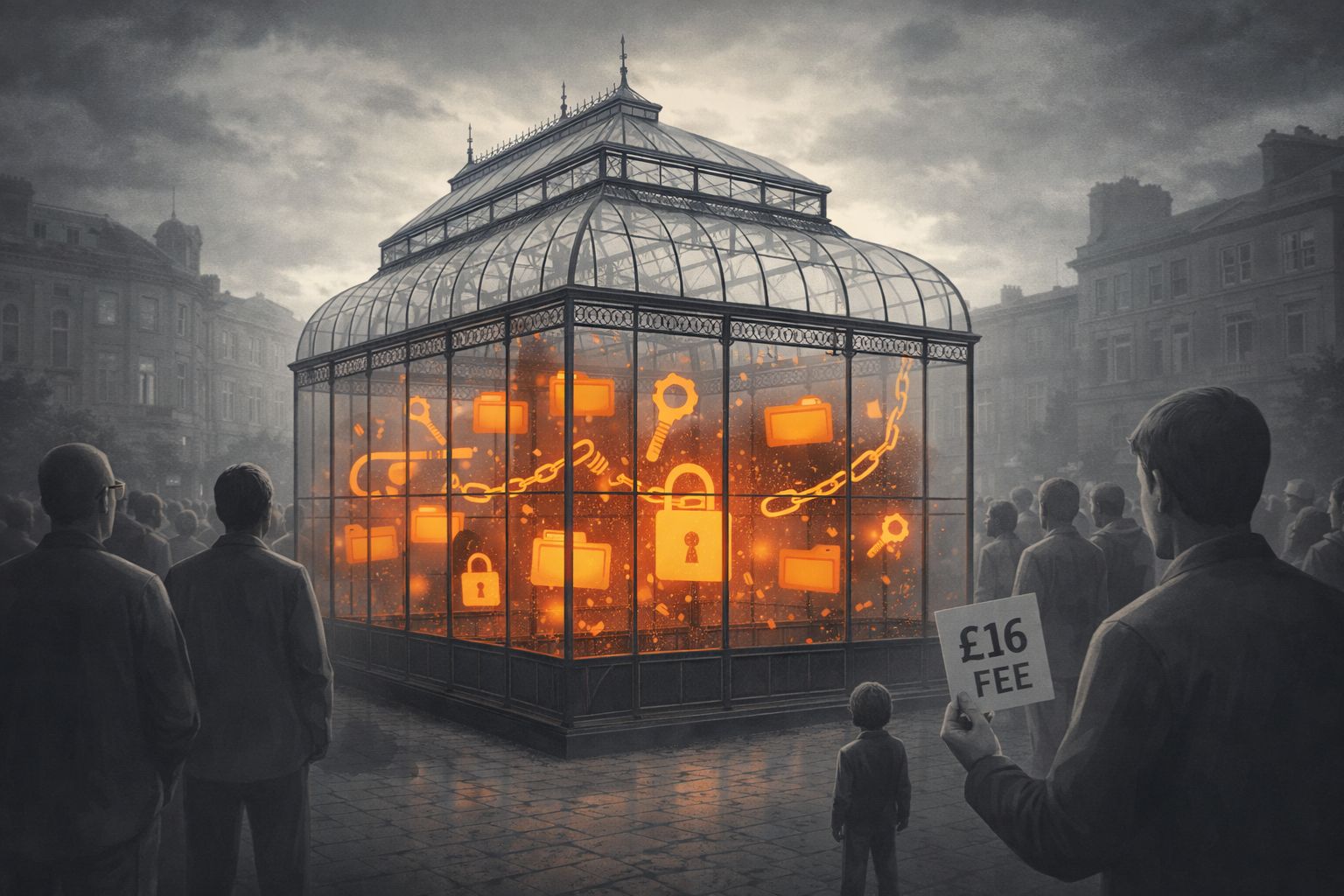
When private lives quietly enter the public record
For professionals in the UK, privacy is a default setting. We secure our lives with encryption, biometric locks, and passwords. Yet there is an irony at the heart of English inheritance law: the moment you are no longer here to protect your data, the state invites the public to view some of the most private information you will ever commit to writing.
This gap matters more today than at any point before.
Ownership vs. Access: The Role of a Letter of Wishes
It is crucial to distinguish between transferring legal ownership and granting practical access. Under English law, a Will directs who should receive the deceased's property — but the actual transfer of title happens through estate administration. What a Will cannot safely do is carry access credentials.
"A Will becomes a matter of public record once probate is granted. It is never the right place for passwords, seed phrases, or device PINs."
Estate planners address this by recommending a private Letter of Wishes alongside the Will. Unlike the Will, this is a confidential document intended solely for executors and family — the appropriate place for sensitive instructions that should remain private.
A Letter of Wishes is private, but it is also static. Modern digital life is dynamic.
Passwords change, 2FA methods update, accounts evolve. A document locked in a drawer quickly becomes a private — but useless — set of old keys.
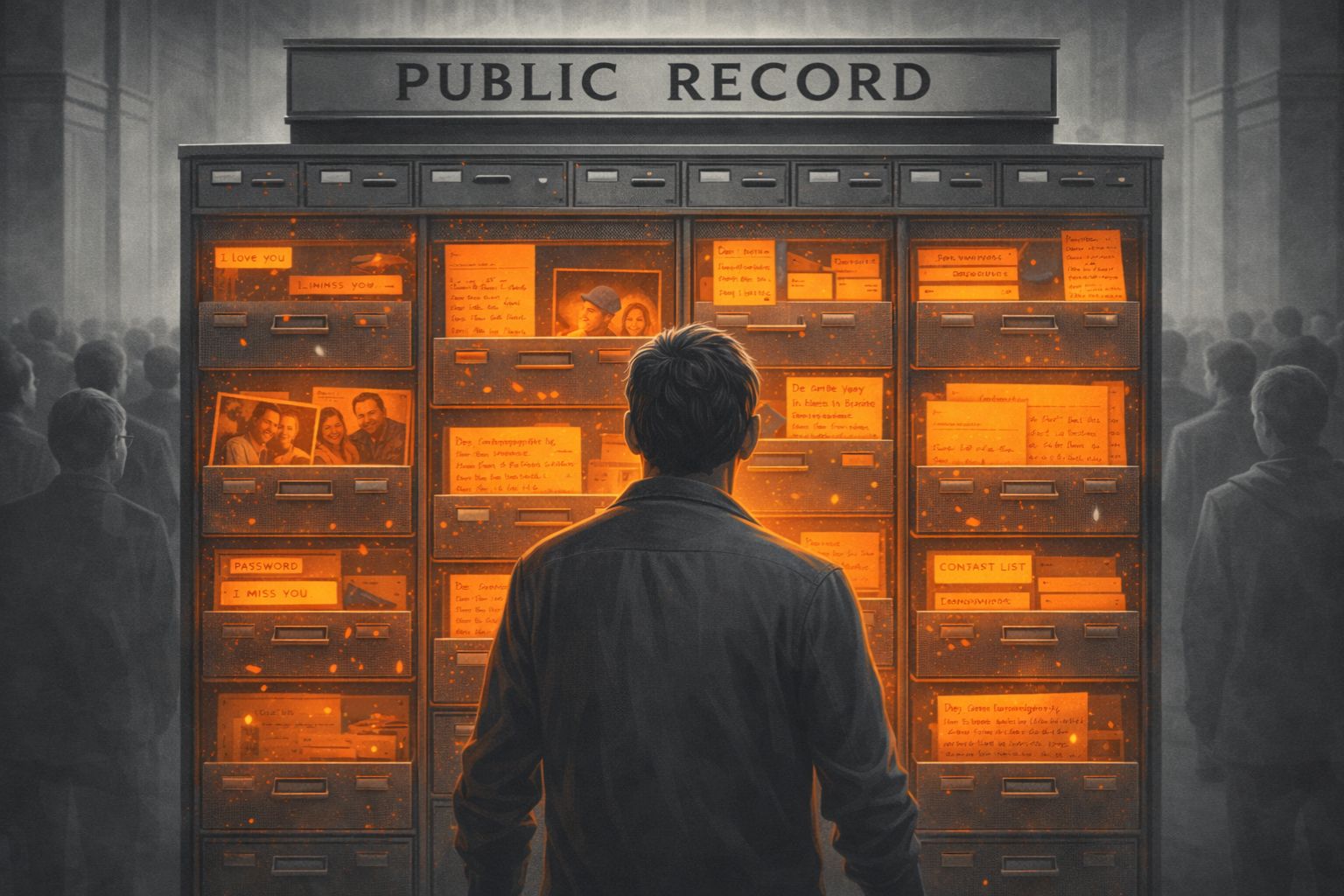
Private lives, public records
What actually gets lost
The real losses are rarely abstract. They surface at the moment of greatest vulnerability:
- A dormant pension from a previous employer, tied to a forgotten online portal
- An insurance policy that no longer has a paper trail
- Years of family photographs saved to a cloud account protected by two-factor authentication
- Cryptocurrency held in a wallet whose seed phrase exists nowhere accessible
- Subscription accounts, digital businesses, or domain names that simply expire
This is not a theoretical risk. It is a massive administrative burden that surfaces precisely when the people left behind have the least capacity to deal with it.
A private layer outside the public record
The solution is not to replace Wills, but to complement them with a private layer that sits entirely outside the public probate system — a space for information that is too sensitive to be made public, yet too important to be left inaccessible.
This has led to dedicated tools designed to solve exactly this problem: secure applications that allow individuals to organise access instructions, credentials, and context separately from legal documents — encrypted, private, and released only under clearly defined conditions.
Such solutions do not alter the legal process itself. They address the practical reality that modern lives depend on access as much as ownership.
If you want to understand exactly how notes and access instructions are released to a trusted person, this guide explains the process step by step.
Read the guide →Beyond technology
For most of history, what we left behind was tangible and legible to others. Today, much of what matters exists quietly behind systems designed for the living — not for those who come after.
When access disappears, it is rarely just data that is lost, but continuity and context. Questions of digital inheritance are not really about technology. They are about responsibility, care, and the order we leave behind when we are no longer here to explain things ourselves.
For asset-holding, time-poor professionals, organising digital access is not pessimism. It is an administrative responsibility — because information, and access to it, shapes everything we leave behind.
Your private layer,
outside the public record.
Store access instructions, passwords, and sensitive notes securely — encrypted, private, and released only to the people you choose.
Start for free →No credit card required. Basic version is free.